How Growing Businesses Manage Inventory
Growth rarely looks the way it is expected to on paper. For many small and medium-sized businesses, success does not arrive in neat, predictable stages. It arrives in bursts. A strong sales period. A new customer. A larger order than anticipated. Suddenly, stock levels rise and space becomes an immediate concern.
Across the UK, businesses are finding that storage is no longer a background consideration. It is an operational decision that directly affects cash flow, productivity and the ability to respond to demand.
Flexible storage has become a key part of how modern businesses manage that pressure.
Space Is Often the First Constraint
Most growing businesses begin in limited surroundings. Home offices, small units or shared workspaces are common starting points. These environments work well until inventory begins to scale.
As stock increases, it starts to compete with people, equipment, and daily operations. Packing areas expand into offices. Access routes narrow. Time is lost moving goods around rather than moving them out.
At this stage, many businesses realise that their challenge is not demand, but space.
Warehouses vs. container storage
A common reaction to space pressure is to look for larger premises or warehouse space. While this can make sense for established operations, it is often the wrong move for businesses still experiencing fluctuating demand.
Long leases, business rates and fixed overheads introduce risk. Once the space is secured, the cost remains regardless of whether it is fully used. For businesses that experience seasonal peaks, promotional spikes or contract-based work, this can quickly become inefficient.
What many companies need is not more permanent space, but adaptable space.
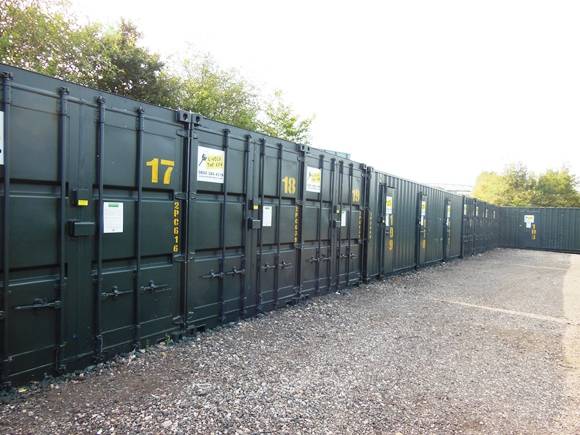
Container-based storage offers a practical solution to short and medium-term space challenges. It allows businesses to separate inventory storage from their core working environment while retaining easy access to stock.
This approach is particularly effective for:
Seasonal inventory that only sells part of the year
Bulk stock purchased to secure better pricing
Packaging materials and consumables
Overflow stock during busy trading periods
Because containers are modular, storage capacity can increase or decrease as required. Businesses are not forced to predict long-term space needs in advance, which reduces both risk and wasted cost.
The Importance of Access
Storage is not just about where stock is kept, but how easily it can be reached.
Drive-up container storage allows goods to be loaded and unloaded directly from vehicles. There are no shared corridors, loading bays or restricted access times to manage. For small teams or owner-managed businesses, this simplicity makes a measurable difference.
Less handling means less time, less strain and fewer errors. Over weeks and months, those efficiencies add up.
Flexible vs. Fixed Storage
One of the biggest advantages of flexible storage is financial. Instead of turning storage into a fixed overhead, businesses can keep it variable and responsive to demand.
This protects working capital during quieter periods and allows businesses to scale up confidently when opportunities arise. Storage becomes a tool that supports growth, rather than a cost that restricts it.
It also allows businesses to make better operational decisions. Stock can be held closer to where it is needed, without compromising workspace or staff efficiency.

Designed for Small Businesses
Shopify data shows that many small e-commerce businesses fulfil orders outside traditional working hours. Founders often manage logistics alongside other jobs or responsibilities.
Container storage with round-the-clock access supports that reality. Stock can be accessed early in the morning, late at night or around courier schedules without being limited by opening hours.
This is not about convenience. It is about maintaining operational control.
In the North East, providers such as U Hold The Key offer container-based storage designed specifically for business use. With multiple locations and drive-up access, their sites support companies that need overflow or temporary inventory space without committing to warehouse leases.
For businesses dealing with fluctuating stock levels, this kind of infrastructure can remove a major barrier to growth.

Conclusion
Space constraints are a natural part of business growth, but they do not need to become a barrier. With the right storage in place, businesses can manage inventory more efficiently, protect cash flow and stay focused on what matters most.
Flexible storage allows businesses to respond to demand as it happens, without locking themselves into decisions that no longer fit six months later.
For many growing companies, the right storage solution is not about size. It is about control, access and adaptability.
Meher
Written 12th Jan 2026